
 Powered Now
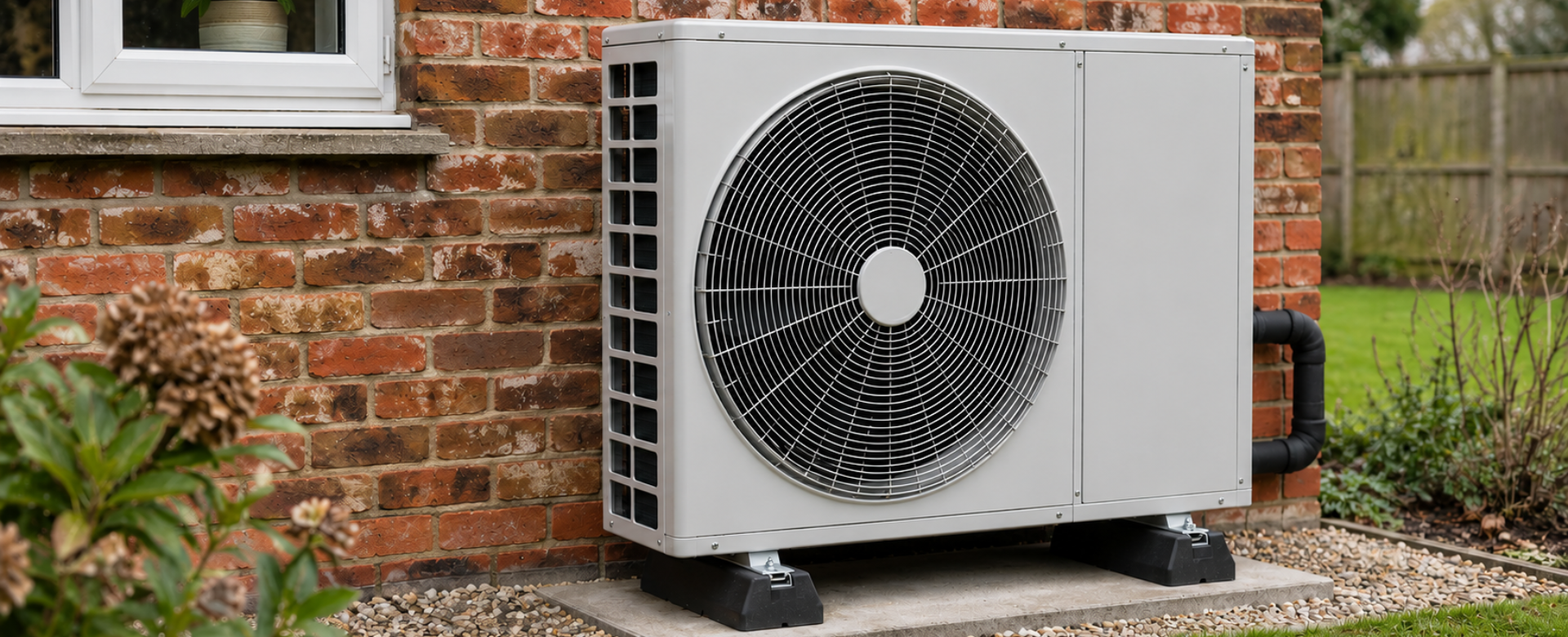
You’ve had the enquiry. The customer wants a heat pump and you’d like the job. Then the doubt creeps in. Am I actually allowed to fit this? So the quote sits in your drafts while you go looking for an answer. By the time you’ve found one, they’ve booked someone else.
Here’s the straight answer, so you can get the quote out.
The Short Answer: It Depends
Not every heat pump needs an F-gas engineer. What matters is whether you’ll be working on the refrigerant circuit.
Monobloc Heat Pumps
No F-gas certification needed for installation. A monobloc air source heat pump has a hermetically sealed refrigeration circuit, so you don’t need F-gas certification to install one. The refrigerant is sealed inside the outdoor unit at the factory. You’re connecting water pipes, not handling gas. Read Baxi’s guidance.
That covers most of the domestic market. Split systems are thought to make up under 5% of air source heat pump sales so far, with monobloc units making up the vast majority. Read Mitsubishi Electric’s heat pump maintenance guide.
Split Heat Pumps
Yes, you need F-gas certification when connecting a refrigerant circuit containing F-gas. A split system divides the refrigerant circuit between indoor and outdoor units, and the pipework connecting them has to be done by a specialist refrigerant engineer. If you’re running refrigerant lines, charging or recovering F-gas, that’s F-gas work. Read Baxi’s air source heat pump installer guide.
No F-Gas Doesn’t Mean No Training
Fitting a monobloc without F-gas is legal. Fitting one without knowing heat pumps is a different matter. Baxi recommends a solid background in plumbing and heating, ideally the NVQ Level 3 in air source heat pump installation, along with MCS certification. Read Baxi’s training recommendations.
MCS matters if your customer is after government grant funding, so it’s worth sorting early if you plan to do this work regularly.
When F-Gas Is Worth Having Anyway
Even if you only fit monoblocs, F-gas certification can earn its keep. It lets you install and maintain air conditioning units and split heat pumps containing F-gas, provided your qualification covers the work, which gives you more ways to earn and can fill out your summer diary. Check the qualifications required on GOV.UK.
A common route is the City & Guilds 2079 qualification. Businesses carrying out installation, servicing or maintenance on stationary equipment containing F-gas for other people also need company certification, including sole traders. REFCOM is one certification provider. Check the individual and company certification requirements.
What About The Rules Changing?
You may have seen headlines about the F-gas rules tightening. Here’s where things stand for England, Scotland and Wales. Defra has confirmed it won’t legislate in 2026 to change the HFC phasedown steps due from 1 January 2027. The existing GB F-gas regulation stays in force, including current product bans. Read Defra’s update.
That doesn’t mean nothing changes. Under the current rules, the quota drops from 31% to 24% of the baseline in January 2027, a reduction of roughly 22.6% in quota measured in CO2 equivalent. This could put further pressure on prices for higher-GWP refrigerants. Read more about the phasedown.
One thing to watch if you read industry news: Northern Ireland follows the EU F-gas rules, and the EU is moving faster than GB with stricter limits, so check which regime an article is talking about. Read about the differences between GB and Northern Ireland.
Where The Paperwork Comes In
If you are F-gas certified, the job doesn’t end when the system’s running. For heat pump installers, the obligations include holding the right individual qualification and company certification for the work being carried out.
Record-keeping and leak-check requirements depend on the equipment and its refrigerant charge. Where records are required, these include the dates and results of mandatory leak checks and must be kept for five years. Check the record-keeping requirements and which systems need leak checks.
And that’s where most engineers come unstuck. Not on site. Afterwards.
The leak check that got done but never got written up. The record scribbled on a job sheet that’s now somewhere in the van. The certificate you meant to send that evening, then the next, then forgot about until the customer rang asking for it. That’s LATER, and on F-gas work it’s not just untidy. It’s a compliance risk.
Do The Check, Do The Record, There And Then
Powered Now now includes an F-Gas Leak Inspection Record certificate, built into the same app you use to quote, book and invoice. Fill it in on site, get it signed off, and send it to the customer before you’ve packed the tools away. Then invoice the job from the drive. It’s just the start: more F-gas and air conditioning certificates are on the Powered Now roadmap.
No second app. No paperwork night. No chasing a record you can’t find when someone asks for it.
This article is for general guidance only. Always check the latest GOV.UK and manufacturer guidance before starting refrigerant work.